Extending Trigger Buttons
On Bottango Solar and Nova, there are three onboard animation trigger buttons. Under each button there are two header pins. You can use those header pins to connect your own external button to duplicate the functionality of an onboard button.
Bridging a connection between the two header pins is electrically identical to pressing the onboard button. If you wanted to wire up an external button, wire it such that when the button is pressed, the two header pins are connected to each other.
Here is a simple breadboarded example using Bottango Solar, two breadboard jumper wires, a breadboard, and a standard push button:
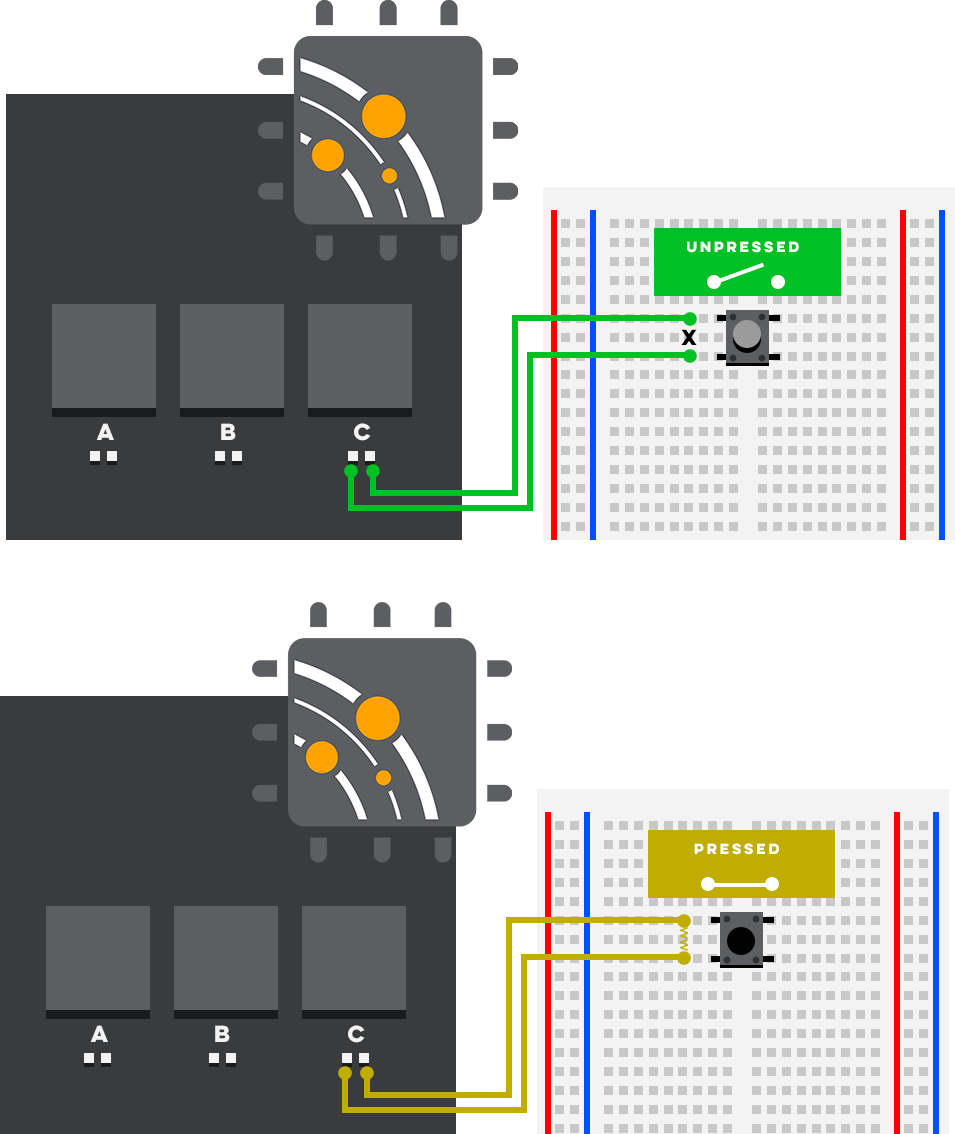
In this example, the button and wires are arranged on the breadboard such that pressing the button closes the connection between the two header pins on Bottango Solar. Note that you do not need to use the power or ground rails of the breadboard or the Bottango control board. You only need to close or open the connection between the two header pins to match the functionality of pressing the onboard button.
You are not limited to using push buttons and breadboards; the above is just the simplest example.
Stop Button Off Board
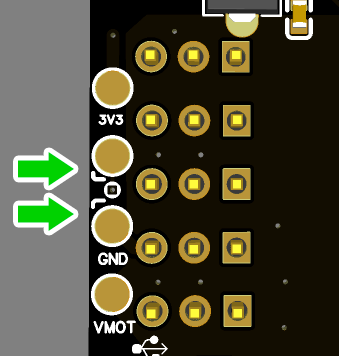
Section titled “Stop Button Off Board”All three control boards have a stop button, which can be extended off board as well. However, on Bottango Solar and Impulse there are not presoldered header pins, and you will need to do some light soldering. The icon for stop button connection points is the same on all boards.
Bottango Nova
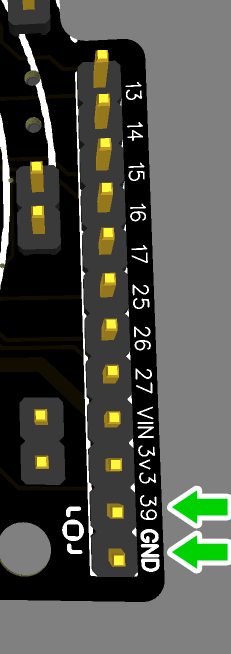
Section titled “Bottango Nova”On Bottango Nova, setting up a button that bridges the bottom and second to bottom side header pins is stop button pressed functionality.
Bottango Solar
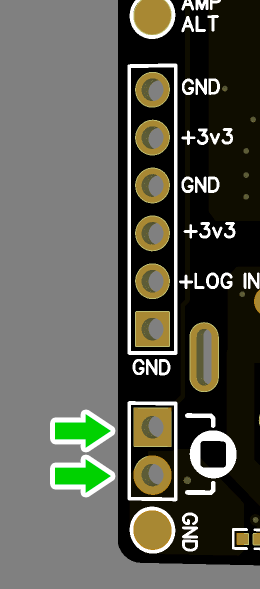
Section titled “Bottango Solar”On Bottango Solar, setting up a button that bridges the two unpopulated stop button header pin through holes is stop button pressed functionality. You can either solder wires directly to the pads, or solder on header pins.
Bottango Impulse
Section titled “Bottango Impulse”On Bottango Impulse, setting up a button that bridges the two solder pads with the stop button icon is stop button pressed functionality. You will need to solder wires to the solder pads.